

Vitamin E, alpha-tocopherol (TE, E307)
Vitamin E not only protects cell membranes but also has antioxidant properties that protect our cells from damage caused by free radicals. Did you know that the best sources of vitamin E are plant-based? You can find out which specific sources these are in the text.
| We provide science-based information on health, nutrition, and sustainability — independent of sponsors, the food industry, and dietary supplement manufacturers. Find out more: our mission. |
A balanced, plant-based diet with few to no industrially processed foods generally provides sufficient macro- and micronutrients, with the exception of vitamin B12. However, phytochemicals are particularly relevant for maintaining health and healing, even though they are not considered essential nutrients – apart from vitamins.
---
Definition
The term vitamin E refers to eight naturally occurring fat-soluble compounds, including four tocopherols and four tocotrienols designated α-, β-, γ-, and δ-. The best-known form is α-tocopherol. Vitamin E was discovered by Evans and Bishop (1922). They considered it a nutrient necessary for the reproduction of rats.
Occurrence
Only plants are capable of synthesizing vitamin E. Therefore, the tocopherol content in plant products is significantly higher than in animal-based foods. The most common forms of vitamin E are tocopherols and tocotrienols. They differ in their vitamin E activity and can be expressed as α-tocopherol equivalent (alpha-TE) in mg per 100 g of food.
Vitamin E is found in nuts such as almonds (26 mg/100 g) and hazelnuts (15.0 mg), in vegetables such as radicchio (2.3 mg), avocado (2.1 mg), spinach (2.0 mg), Swiss chard (1.9 mg), asparagus (1.1 mg), and in fruits such as mango (0.9 mg) andraspberries (0.8 mg). Other sources include seeds and oils derived from them, such as sunflower seeds (35.0 mg) andsunflower oil (41.0 mg).1
Storage and preparation losses
Vitamin E is relatively stable against heat. With a typical diet and gentle cooking methods, about 10% of the vitamin E is lost. However, losses are significantly higher when frying, roasting, and braising.12
Nutrition – Health
Vitamin E is a component of cell membranes and, as an antioxidant, protects membrane lipids and lipoproteins from degradation by free radicals. This effect is also known in fats and oils that are enriched with vitamin E to protect against oxidation. Furthermore, vitamin E plays an important role in maintaining the normal function of immune cells and in protecting the central nervous system.2,9,10
| This is not just for vegans or vegetarians: Vegans often eat unhealthily. Avoidable nutritional mistakes. |
Long-term daily requirement
The estimated values for average vitamin E intake are based on the intake of polyunsaturated fatty acids. A daily recommendation is 12 mg alpha-TE.2
Deficiency symptoms
are very rare in Europe nowadays, as the liver and fatty tissue are very good at storing vitamin E. However, premature infants may be at risk of vitamin E deficiency because the placenta does not transfer sufficient amounts of α-tocopherol to the fetus.
Proven deficiencies usually only occur in connection with diseases that also impair fat absorption. Such hypovitaminosis manifests itself through impaired concentration, dry, wrinkled skin, fatigue, reduced performance, poorly healing wounds, irritability, and an increased risk of arteriosclerosis.
Vitamin E deficiency ataxia is a genetically inherited disorder caused by mutations in the α-tocopherol transfer protein (TTPA) gene. Ataxia is very rare.11
Oversupply
The upper limit of the tolerable intake (UL) is 1000 mg/day, which corresponds to 1100 IU of synthetic or 1500 IU of natural vitamin E. With excess vitamin E, increased excretion occurs in a water-soluble form via the kidneys. Because vitamin E has extremely low toxicity, recommendations exist for up to almost 270 mg per day. For example, supplementation with these amounts led to a significant improvement in symptoms in patients with atopic dermatitis.5,7
Functions in the body
One of the most important functions of vitamin E is that of an antioxidant, capable of protecting polyunsaturated fatty acids in membrane lipids, lipoproteins, and stored fat from destruction by oxidation (lipid peroxidation). Free radicals attack the double bonds of the fatty acids in cell and organelle membranes, thereby destroying the cell itself in the course of these destructive reactions.
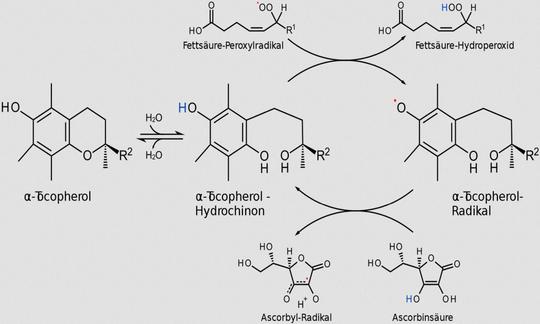
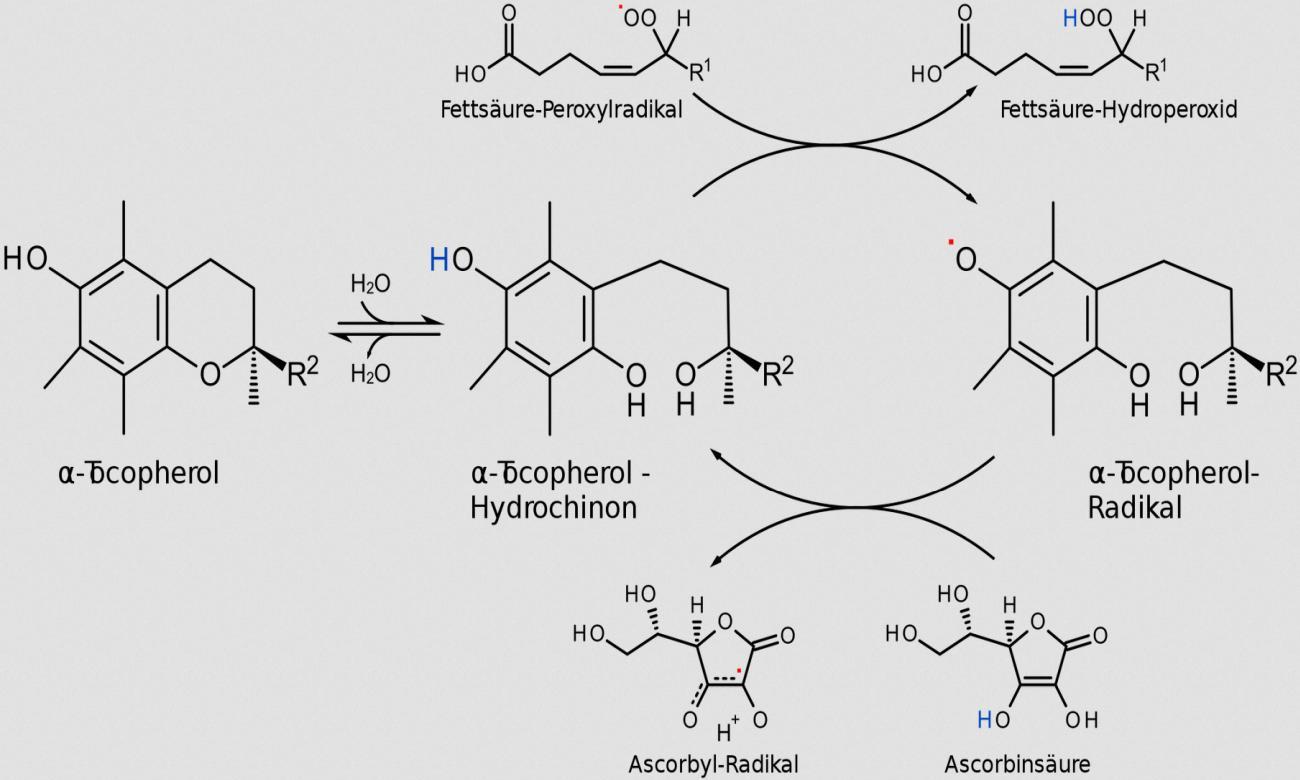
Vitamin E acts as a free radical scavenger. By donating an electron to the radical, which neutralizes it, it transforms itself into a free radical. However, vitamin E as a free radical is relatively unreactive. Vitamin C subsequently reduces the vitamin E free radical, which is then returned to its original state and is again available as an antioxidant. It plays a role in the regulation of the gonads and is therefore also considered an anti-sterility vitamin.2,3,4
Gamma-tocopherol is significantly more concentrated in natural foods than alpha-tocopherol. It has a particularly strong anti-inflammatory effect. Furthermore, it is able to neutralize nitrogen species. These nitrogen species are nitrogen-based free radicals and are considered the main cause of atherosclerosis and other cell and tissue damage, including cancer.
It appears that there is little scientific research on all 16 vitamin E subgroups. Therefore, our understanding of the physiological significance of these subgroups is limited. α-Tocopherol is the most thoroughly studied substance in this context. However, it is likely that all 16 subgroups are necessary for physiologically significant efficacy.
Supplementing with only one subgroup, usually α-tocopherol, leads to the displacement of naturally occurring subgroups and thus to unphysiological concentration levels in the body. To obtain all 16 variants and thus ensure an optimal supply of this vitamin, consuming natural products is important.
Absorption and Metabolism
The absorption rate of vitamin E is between 25-60 %. The bioavailability of this lipophilic vitamin depends on the ingested dose, the type and amount of dietary fat present, and the presence of bile acids and esterases from the pancreas.
Vitamin E is absorbed along with fats in the intestine. From there, it reaches the liver. The liver releases VLDL (very low-density lipoprotein) to transport the vitamin E via the bloodstream to the target cells.4
Storage - Consumption - Losses
The human body is most efficient at storing and transporting α-tocopherol. This is because the α-tocopherol transfer protein (α-TTP), found in the liver and responsible for transporting vitamin E via VLDL into the bloodstream, has the highest affinity for α-tocopherol. The body's total vitamin E content is approximately 2-5 g. In the storage organs of liver, muscles, nerve tissue, and adipose tissue, vitamin E is found integrated into the cell membrane within mitochondria, microsomes, and cell nuclei.2,3
Structures
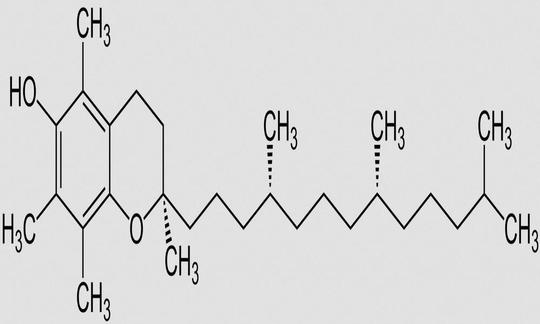
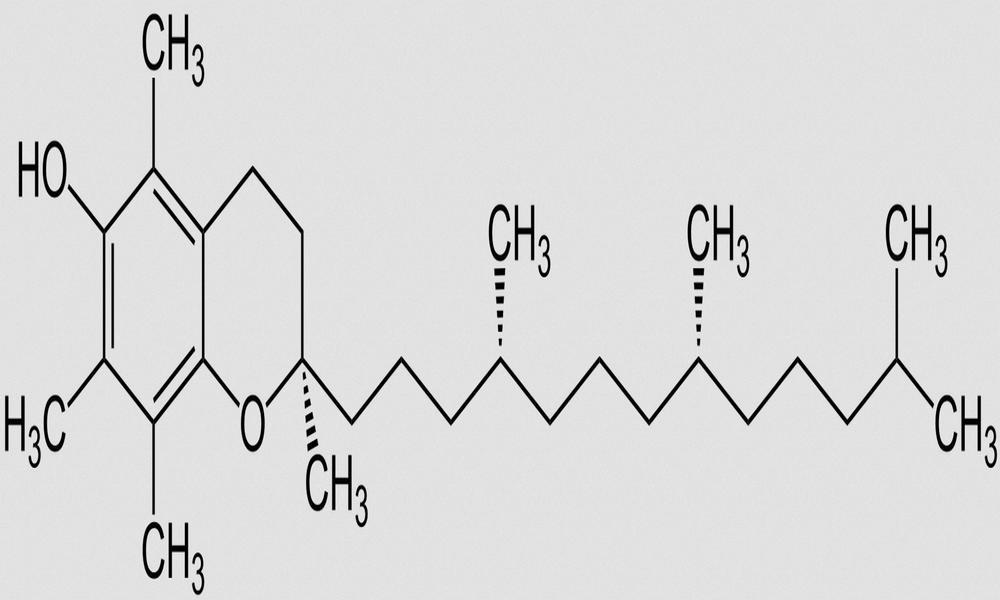
The basic structure of all vitamin E forms is a hydroxylated chroman ring, the methylation of which divides them into α-, β-, γ-, or δ-forms. The number and position of the methyl groups on the chroman ring determine the different vitamin E activities of the individual forms. Tocopherols have a saturated side chain, tocomonoenols and marine tocopherols a monounsaturated side chain, and tocotrienols a triply unsaturated side chain.4
Bibliography - 12 Sources (Link to the evidence)
| 1. | US-Amerikanische Nährwertdatenbank USDA. |
| 2. | Biesalski HK, Grimm P. Taschenatlas der Ernährung. 6. Auflage. Georg Thieme Verlag: Stuttgart und New York. 2015. |
| 3. | Zimmermann M, Schurgast H et al. Burgersteins Handbuch Nährstoffe. 9. Auflage. Karl F. Haug Verlag: Heidelberg. 2000. |
| 4. | Pietrzik K, Golly I et al. Handbuch Vitamine. Für Prophylaxe, Beratung und Therapie. Urban & Fischer Verlag: München. 2008. |
| 5. | Tsoureli-Nikita E, Hercogova J et al. Evaluation of dietary intake of vitamin E in the treatment of atopic dermatitis: a study of the clinical course and evaluation of the immunoglobulin E serum levels. Int J Dermatol. 2002 Mar;41(3):146-150. |
| 6. | Mustacich DJ, Bruno RS et al. Vitamin E. Vitam Horm. 2007;76:1-21. |
| 7. | Traber MG, Manor D. Vitamin E. Adv Nutr. 2012 May 1;3(3):330-331. |
| 8. | Morrissey PA, Hill TR. Vitamins | vitamin E. Encyclopedia of Dairy Sciences. 2nd ed. Academic Press; 2011. p. 652-660. |
| 9. | Pekmezci D. Vitamin E and immunity. Vitam Horm. 2011;86:179-215. |
| 10. | Ulatowski LM, Manor D. Vitamin E and neurodegeneration. Neurobiol Dis. 2015 Dec;84:78-83. |
| 11. | Agarwal A, Garg D et al. Ataxia with vitamin E Deficiency: A Never to be Missed Treatable Ataxia. Ann Indian Acad Neurol. 2023 Nov-Dec;26(6):1011-1012. |
| 12. | Ernaehrungs-umschau.de. Vitamin E. |
- Ernst Erb (Author)
- Karin Rustmeier, Dipl. Food Engineer ETH (Author)
- Michael Weber, Federal diploma Pharmacist, MSc Infection Biology (Validator)
- Ranin Huemer, BSc in Nutritional Science (Validator)
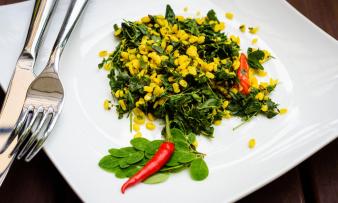
This moringa leaf curry with moong dal and cumin stands out due to its special but very healthy ingredients. The spiciness can be easily adjusted.
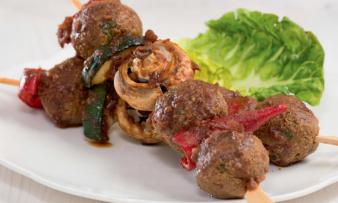
These vegan teriyaki shish kebabs can be beautifully combined with a wide variety of vegetables. Good alternative to traditional shish kebabs.
With its combination of nutrient-dense ingredients, this delicious and fruity moringa smoothie with passion fruit and kiwi is a nutritious and refreshing treat.

Horseradish tree leaves (moringa, castor oil plant) are rich in nutrients and proteins. Moringa leaves are used raw or traditionally cooked. Organic?

Moringa powder (organic?) consists of dried leaves (raw?) of the horseradish tree. Fresh leaves are valuable in the countries of origin to combat malnutrition.

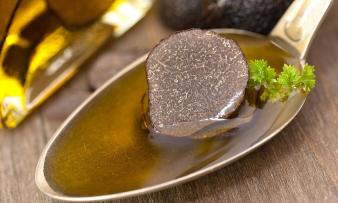
Truffle oil is used in the kitchen to give salads and dishes the truffle aroma. No pressing process is used in the production process. Raw? Organic?
Comments